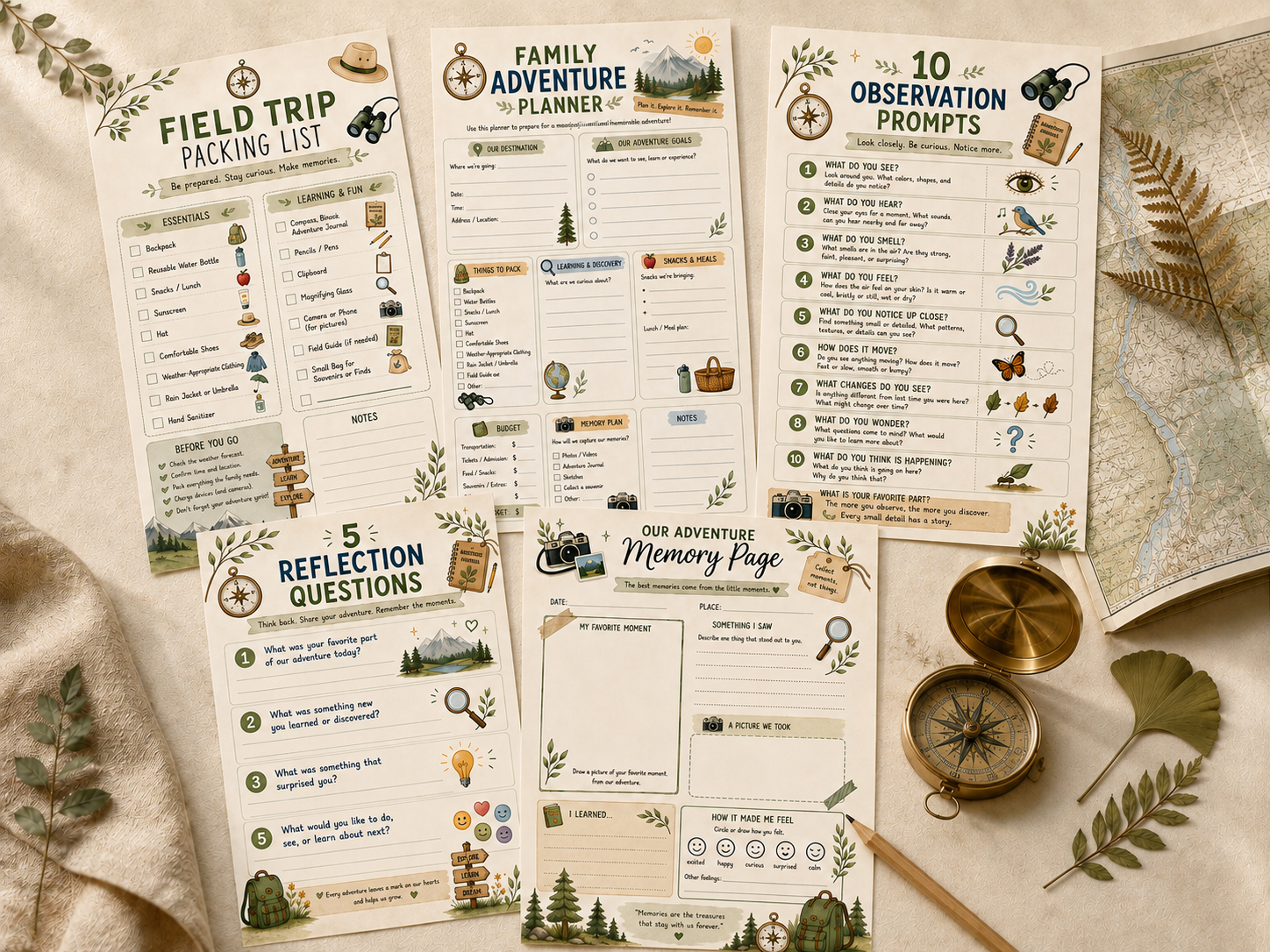
The best field trip bag solves ordinary problems quietly: thirst, hunger, changing weather, tired hands and the sudden need to write something down. A useful system is repeatable and light enough that children can help manage it.
The true essentials
- Tickets, membership card or reservation confirmation
- Phone, slim power bank and emergency contacts
- Refillable water and tidy, protein-rich snacks
- Medication, sunscreen and a small first-aid pouch
- Wallet, keys, wipes and resealable bags
Keep these in the same pockets every trip. Consistency beats a perfectly organized bag that changes each time.
Light learning tools
Bring one pencil per child, a small clipboard or firm folder, and only the pages you realistically expect to use. For ages 8–12, one observation page and one open-ended challenge are often enough. Add blank index cards for unexpected questions or sketches.
Start with one activity page. You can always offer another; it is harder to recover the mood after a child sees a thick packet.
Comfort and weather
Check the forecast and venue rules. A thin layer, foldable rain jacket, sun hat or spare socks can save the day. For outdoor destinations consider insect repellent. Museums and aquariums may call for a light sweater.
Choose comfortable shoes. If your family uses a stroller, mobility aid or sensory supports, check entrances and accommodations in advance.
What is better left at home
- A full curriculum binder
- Too many art supplies
- Messy snacks or open cups
- Heavy books “just in case”
- Anything precious that would derail the day if lost
A calm night-before routine
- Check hours, parking, weather and food rules.
- Let each child choose one must-see item.
- Fill water bottles halfway and refrigerate them.
- Place clothing, shoes and the bag by the door.
- Choose one curiosity prompt.
In the morning, add cold snacks and medication. Then leave. A field trip can be meaningful without being maximized.
Make leaving easier
Start with a plan you can reuse.
The free Adventure Starter Kit includes a packing list, planner, observation prompts, reflection questions and a memory page.
Get the free Starter Kit →